
 By Admin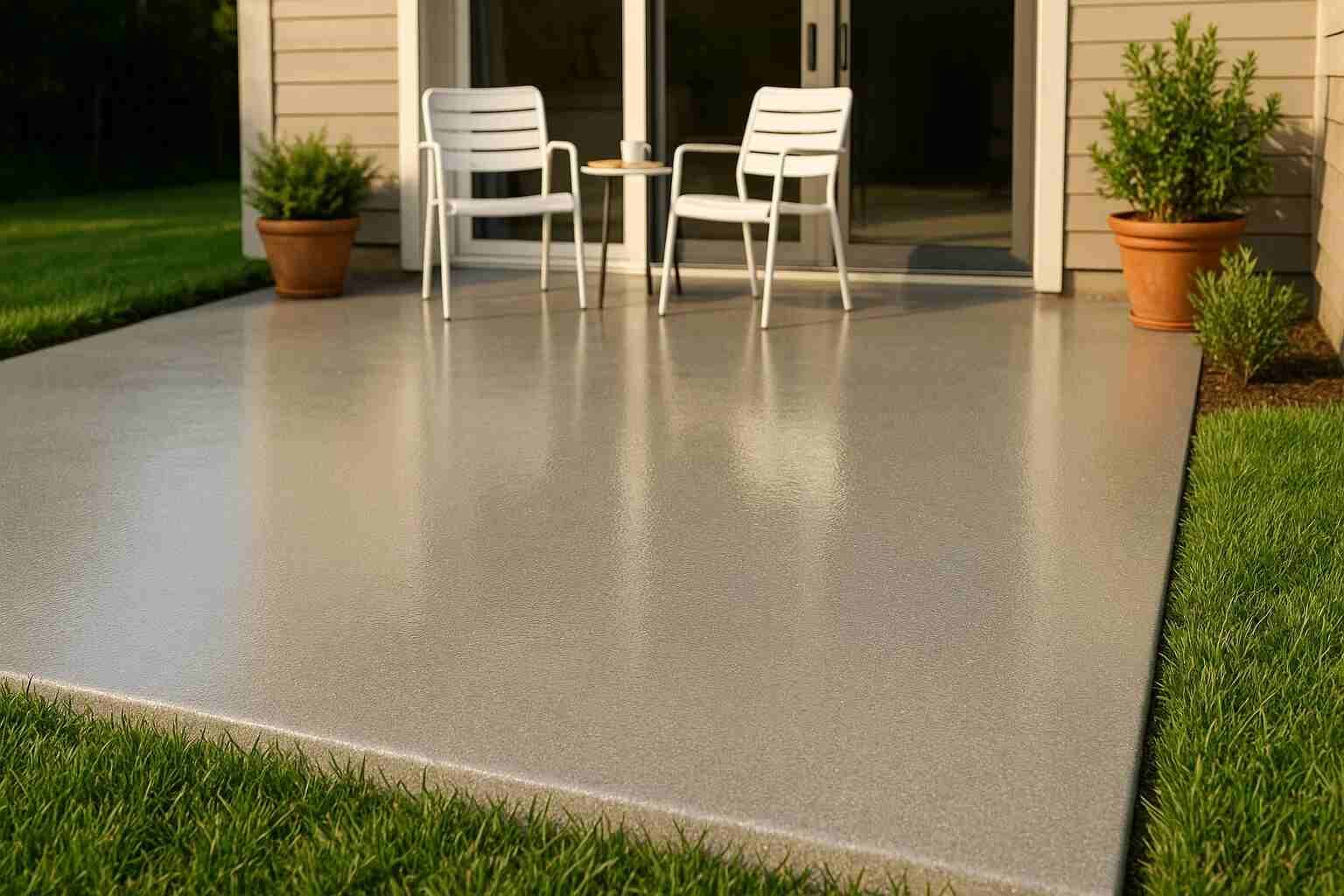
An exterior floor coating is one of the best investments you can make to protect and beautify your outdoor concrete surfaces. From patios and porches to walkways and pool decks, the right coating prevents damage, enhances safety, and boosts your home’s curb appeal. This guide will walk you through everything you need to know, from choosing the best material to preparing the surface and applying the coating like a professional.
What is an Exterior Floor Coating and Why It Matters
An exterior floor coating is a durable, protective layer applied over outdoor surfaces like concrete patios, porches, and pool decks. It creates a resilient barrier that shields the underlying material from moisture, UV rays, chemicals, and physical abrasion. Without this protection, outdoor concrete is vulnerable to cracking from freeze-thaw cycles, staining from spills, and gradual deterioration from weather exposure. For example, a home in a coastal area faces constant salt air that can corrode concrete, while a home in the Midwest must contend with harsh winters that cause water to expand and fracture the surface.
Coatings vs. Paints vs. Sealers
It’s important to distinguish between these three common products. A sealer is a thin, clear liquid that penetrates the concrete to block water, but it offers minimal protection against wear and tear. Paint (like porch and patio paint) adds color and provides some surface protection, but it’s a relatively thin layer that can peel or chip under heavy traffic. An exterior floor coating, on the other hand, is a much thicker, high-performance system—often made from materials like epoxy, polyaspartic, or polyurethane—that chemically bonds to the concrete to form a seamless, waterproof, and extremely durable surface.
Common Uses for Exterior Coatings
- Patios and porches
- Pool decks and surrounds
- Walkways and steps
- Garage aprons
- Balconies
A high-quality exterior floor coating not only protects these areas but also improves safety by allowing for the addition of anti-slip textures. It transforms a purely functional space into a finished, attractive part of your home.
Compare the Main Types: Epoxy, Polyaspartic/Polyurea, Polyurethane, Acrylic
Choosing the right material is the most critical step in any exterior floor coating project. The four main types—epoxy, polyaspartic, polyurethane, and acrylic—each offer a unique balance of durability, cost, and UV resistance. Understanding their differences will help you select the best option for your specific climate and needs. While traditional epoxy has been a popular choice for years, newer chemistries like polyaspartic and polyurethane offer superior performance for outdoor applications, particularly when it comes to handling sunlight and temperature fluctuations.
Strengths and Weaknesses Comparison
Here is a breakdown of how these materials compare across key performance metrics.
Feature | Epoxy | Polyaspartic/Polyurea | Polyurethane | Acrylic |
|---|---|---|---|---|
UV Resistance | Poor (will yellow) | Excellent | Good to Excellent | Good |
Durability | Good to Excellent | Excellent | Excellent | Fair |
Flexibility | Low (can be brittle) | Good | Excellent | Good |
Cure Time | 24-72 hours | 2-12 hours | 12-48 hours | 4-24 hours |
Cost / sq. ft. | $3 – $7 | $5 – $12 | $4 – $9 | $1 – $3 |
Expected Lifespan | 2-5 years (outdoors) | 15+ years | 10+ years | 1-3 years |
Best Applications for Each Type
- Epoxy: Best used as a primer or base coat in a multi-layer system, where it can be protected by a UV-stable topcoat. It’s not recommended as a standalone exterior topcoat due to its tendency to amber in sunlight.
- Polyaspartic/Polyurea: The premium choice for any outdoor surface. Its rapid cure time, extreme durability, and superior UV resistance make it ideal for pool decks, patios, and high-traffic walkways, especially in sunny climates.
- Polyurethane: An excellent topcoat over an epoxy base. It offers great UV stability, chemical resistance, and flexibility, which helps it resist cracking. It is more scratch-resistant than epoxy.
- Acrylic: A budget-friendly, DIY-friendly option for low-traffic areas like a small porch. It offers a “freshly sealed” look but requires frequent reapplication.
How to Choose the Right Exterior Floor Coating (Decision Matrix)
With several types of exterior floor coating systems available, selecting the perfect one depends on your specific situation. Key factors include the amount of sunlight your patio receives, the level of foot traffic, your budget, and whether you plan to do the work yourself. A family with kids and pets in a sunny climate has very different needs than a single person with a small, shaded balcony. Answering a few simple questions can quickly narrow down your choices and point you toward the most effective solution for your home.
Key Questions to Ask Yourself
Before you buy, consider the following:
- Sun Exposure: Does the area receive direct, all-day sun? If so, UV stability is non-negotiable, making polyaspartic or a high-quality polyurethane topcoat essential.
- Foot Traffic: Is this a high-traffic walkway or a rarely used side patio? High-traffic areas need superior abrasion resistance, found in polyaspartic and polyurethane systems.
- Chemical Exposure: Will the surface be exposed to pool salt, de-icing salts, or chemicals? Polyurethanes and polyaspartics offer the best chemical resistance.
- Budget: What is your budget per square foot? Acrylics and simple paints are the cheapest, while professional-grade polyaspartic systems are the most expensive but offer the best long-term value.
- DIY vs. Pro: Are you comfortable with extensive surface prep and mixing two-part chemicals with a short pot life? If not, a professional installation or a simpler single-component product may be better.
DIY vs. Professional Installation Checklist
Many homeowners can achieve great results with DIY kits, but some tasks are best left to professionals who have specialized equipment.
- Tasks Suitable for DIY: Cleaning, light acid etching, applying single-component sealers or paints, and rolling on two-part kits on a small, simple surface.
- Tasks Best for Professionals: Mechanical grinding to profile the concrete, significant crack and spall repair, moisture vapor emission testing, and applying fast-curing polyaspartic systems that require speed and precision. A pro ensures the concrete’s profile is perfect for a permanent chemical bond, which is the most common point of failure for DIY projects.
Preparing the Surface: Step-by-Step
Proper surface preparation is the single most important factor for a long-lasting exterior floor coating. Over 80% of coating failures are due to inadequate prep work. The goal is to create a clean, porous, and structurally sound surface that the coating can chemically bond to. Skipping or rushing these steps will lead to peeling, bubbling, and chipping, no matter how expensive your coating material is. Preparation always takes more time than the coating application itself, so plan accordingly and do not cut corners.
Cleaning, Repairing, and Profiling
The process can be broken down into a few key stages. Always follow the specific instructions provided by your coating manufacturer.
- Thorough Cleaning: Start by sweeping away all loose debris. Use a pressure washer and a degreaser to remove dirt, oil, stains, and any existing sealers or paints that are failing.
- Repairing Damage: Fill any cracks, spalls, or holes with a concrete repair compound. For larger cracks, you may need to use a crack chaser on an angle grinder to open them up before filling. Allow all repairs to cure fully.
- Moisture Testing: Tape a 1’x1′ plastic sheet to the concrete on all four sides. If condensation forms underneath it after 24 hours, you have a moisture issue that must be addressed with a vapor barrier primer.
- Creating a Surface Profile: The concrete must be porous, like 80-grit sandpaper, for the coating to grip. For DIY projects, this is often done with an acid etching solution. For professional results, mechanical grinding with a diamond-tipped grinder is far superior. This process removes the weak top layer of concrete and opens up the pores.
- Final Cleaning: After grinding or etching, thoroughly vacuum up all dust with a shop vac and then wipe the surface with a solvent like denatured alcohol to ensure it is completely free of contaminants.
Tools & Materials Checklist
- Pressure washer and degreaser
- Stiff-bristled broom
- Concrete repair compound and putty knife
- Angle grinder with a diamond cup wheel or crack chaser
- Shop vacuum
- Acid etch solution or mechanical grinder
- Safety gear: Goggles, gloves, respirator, and knee pads
Application Process: Do’s and Don’ts
Once your surface is perfectly prepared, it’s time to apply the exterior floor coating. This stage requires careful planning and attention to detail, as many coating systems have a limited “pot life”—the time you have to work with the material after mixing it. Working methodically and having all your tools ready beforehand is essential. The typical application involves a primer, a base coat (which provides color and strength), and an optional topcoat for added UV protection and durability.
Mixing, Application, and Adding Texture
- Do read the instructions: Each product has specific mixing ratios and application times. Follow the technical data sheet precisely.
- Don’t “eyeball” measurements: Use measuring buckets to get the mix ratio of Part A and Part B exactly right. Mix for the recommended time (usually 2-3 minutes) with a drill mixer.
- Do work in sections: If you have a large area, divide it into smaller, manageable sections. This helps you maintain a wet edge and avoid roller marks.
- Don’t apply in direct sunlight or high heat: This can cause the coating to cure too quickly, leading to bubbles and a weak bond. Work in the shade or during cooler parts of the day.
- Do use the right tools: Use a high-quality, lint-free roller designed for epoxy and coatings. A squeegee can help spread the material evenly before back-rolling.
Adding Anti-Slip Texture
For outdoor surfaces like pool decks and steps, an anti-slip texture is crucial for safety. This is typically achieved by broadcasting a grit aggregate onto the wet base coat.
- While the color coat is still wet, use a spiked hand-spreader or simply your hand to lightly broadcast the aggregate evenly across the surface.
- Allow the base coat to cure, then sweep or vacuum away any loose, excess aggregate.
- Apply a clear topcoat over the textured surface to lock the grit in place and provide a final layer of protection.
Weather, Season & Regional Advice (USA Focus)
The success of an exterior floor coating project is highly dependent on environmental conditions during application and curing. Temperature and humidity affect everything from how the coating flows to how it cures and bonds with the concrete. Applying a coating outside of the manufacturer’s recommended window can lead to a variety of failures, including poor adhesion, discoloration, and reduced durability. This is especially true in the diverse climates across the United States.
Cold-Weather, Hot-Weather, and Coastal Tips
- Cold-Weather Application (Northeast/Midwest): Most coatings should not be applied when the air and surface temperature is below 50°F (10°C) or is expected to fall below that temperature within 24 hours. Cold temperatures drastically slow the curing process and can trap moisture, leading to a weak bond. Plan your project for late spring or early fall.
- Hot-Weather Application (Southwest/South): Avoid applying coatings in direct, intense sunlight or when surface temperatures exceed 90°F (32°C). High heat can make the coating flash cure, creating bubbles and a brittle finish. Work during the cooler morning hours and try to create shade if possible.
- Coastal/Salt Exposure (Florida/California): In coastal regions, salt in the air and groundwater is a major concern. Ensure the concrete is thoroughly pressure washed to remove salt deposits. Choose a coating system with excellent chemical resistance, like a polyaspartic or polyurethane, to prevent corrosion.
Curing Times by Temperature and Humidity
This table provides a general idea of how conditions affect cure times. Always check your product’s specific data sheet.
Temperature | Humidity | Typical Cure Time (Walk-on) | Effect on Coating |
|---|---|---|---|
Below 50°F | Any | 72+ hours | Curing stalls, risk of moisture issues |
60-75°F | < 50% | 24-48 hours | Ideal conditions |
60-75°F | > 80% | 48-72 hours | Slows curing, can cause “amine blush” |
Above 85°F | Low | 8-16 hours | Pot life is very short, risk of bubbles |
High humidity is a major enemy of many coatings, especially polyurethanes, as it can react with the material and cause foaming or cloudiness. Always aim for low-to-moderate humidity when applying your exterior floor coating.
Cost & ROI: How Much Will an Exterior Floor Coating Cost?
Investing in an exterior floor coating can significantly enhance your property’s value and usability, but it’s important to understand the costs involved. The price can vary widely based on the type of material chosen, the size and condition of your surface, and whether you hire a professional or do it yourself. While cheaper options may seem tempting, they often have a much shorter lifespan, leading to higher long-term costs due to the need for frequent re-coating and additional prep work.
Cost Breakdown
Here are typical cost ranges per square foot for both DIY and professional installations:
- DIY Projects:
- Acrylic Sealers/Paints: $1 – $3 per sq. ft. (materials only)
- DIY Epoxy Kits: $2 – $5 per sq. ft. (materials only)
- Professional Installation:
- Epoxy System (with Polyurethane topcoat): $5 – $9 per sq. ft.
- Polyaspartic System: $7 – $12 per sq. ft.
A professional installation costs more because it includes extensive surface preparation (like diamond grinding), use of commercial-grade products, and a warranty. For a typical 200-square-foot patio, a professional polyaspartic coating might cost between $1,400 and $2,400, while a DIY epoxy kit would be around $400 to $1,000 for materials.
When Coating Pays Off
An exterior floor coating delivers a strong return on investment (ROI) in several ways. Firstly, it prevents costly concrete repairs down the line by protecting the slab from water damage, cracking, and spalling. Replacing a concrete patio can cost upwards of $15 per square foot, making a protective coating a smart preventative measure. Secondly, it enhances curb appeal and creates a more functional, attractive outdoor living space, which can increase your home’s resale value. A high-quality polyaspartic system can last over 15 years, meaning your one-time investment provides long-term peace of mind and enjoyment.
Maintenance & Repair: Keeping Your Exterior Coating in Top Shape
Once your new exterior floor coating has fully cured, a simple maintenance routine will keep it looking great and performing well for years to come. High-quality coatings are non-porous and seamless, making them much easier to clean than bare concrete. Proper care not only preserves the coating’s appearance but also helps you maintain its warranty, as neglect can often void coverage.
Cleaning and Recoat Timeline
For general cleaning, simply sweep or blow off leaves and debris regularly. To wash the surface, use a pH-neutral cleaner and water, applied with a soft-bristled brush or a mop. Avoid using acidic or highly alkaline cleaners, as they can dull the finish over time. For tougher stains, a gentle scrubbing may be needed. A light pressure washing once or twice a year can also help keep the surface fresh.
The need to recoat depends entirely on the material you chose:
- Acrylics: May need a new topcoat every 1-3 years.
- Epoxy/Polyurethane Systems: The topcoat may need to be refreshed every 5-7 years to restore its gloss and protective properties.
- Polyaspartic Systems: Can often go 10-15+ years before showing significant wear.
Patching Chips and What Voids Warranties
While modern coatings are extremely tough, a sharp, heavy impact can sometimes cause a chip or deep scratch. To repair this, lightly sand the damaged area, clean it with denatured alcohol, and carefully apply a small amount of the original coating material with a small artist’s brush.
Common actions that may void a manufacturer’s or installer’s warranty include:
- Using abrasive or acidic cleaners.
- Allowing moisture to get under the coating due to unrepaired cracks in the foundation.
- Dragging heavy, sharp objects across the surface.
- Using rubber-backed mats that can trap moisture and stain the coating.
Always keep documentation of your coating system and follow the specific maintenance guidelines provided.
FAQ
What is the best exterior floor coating for patios and porches?
For most patios and porches, a multi-layer system with an epoxy primer and a UV-stable polyurethane or polyaspartic topcoat is the best choice. This combination provides excellent durability, chemical resistance, and protection from sun damage. For the ultimate in performance and longevity, a full polyaspartic system is the top-tier option.
Can you use epoxy floor coating outside?
You can, but with a major warning: standard 100% solids epoxy is not UV stable and will turn yellow or “amber” when exposed to sunlight. If you use epoxy outdoors, it should only be as a base coat, and it must be protected with a UV-resistant topcoat like polyurethane or polyaspartic to prevent discoloration.
How long does an exterior floor coating last?
The lifespan depends entirely on the material. An acrylic sealer might only last 1-3 years. A professionally installed epoxy and polyurethane system can last 5-10 years. A high-end polyaspartic coating system can last 15 years or more with proper maintenance before needing to be refreshed.
How do you prepare concrete for an exterior floor coating?
Proper preparation involves thoroughly cleaning the concrete to remove dirt and oil, repairing all cracks and spalls, and then profiling the surface to make it porous. This is best done by mechanical diamond grinding, but acid etching is a common DIY alternative. The surface must be clean, dry, and have a texture similar to 80-grit sandpaper.
What’s the difference between epoxy, polyurethane, and polyaspartic for outdoor use?
Epoxy provides excellent adhesion and thickness but yellows in the sun. Polyurethane is more flexible and UV stable, making it a great topcoat. Polyaspartic is a type of polyurea that is extremely durable, flexible, UV stable, and cures very quickly, making it the highest-performing (and most expensive) option for outdoor applications.
How much does exterior floor coating cost per square foot?
For DIY kits, expect to pay between $2 and $5 per square foot for materials. For professional installation, which includes extensive prep work and commercial-grade products, costs typically range from $5 to $12 per square foot, depending on the system you choose.
Conclusion & Recommended Next Steps
Choosing and applying the right exterior floor coating is a project that pays dividends in both aesthetics and protection. By transforming your worn-out patio, porch, or pool deck into a durable, safe, and attractive surface, you add lasting value to your home. The key to success lies in selecting a material suited to your climate and properly preparing the concrete surface before application.
Also Read:
Exterior Floor Tiles Guide: Choosing the Best Outdoor Tiles for Patios & Decks
Exterior Floor Tiles Guide: Choosing the Best Outdoor Tiles for Patios & Decks