
 By Admin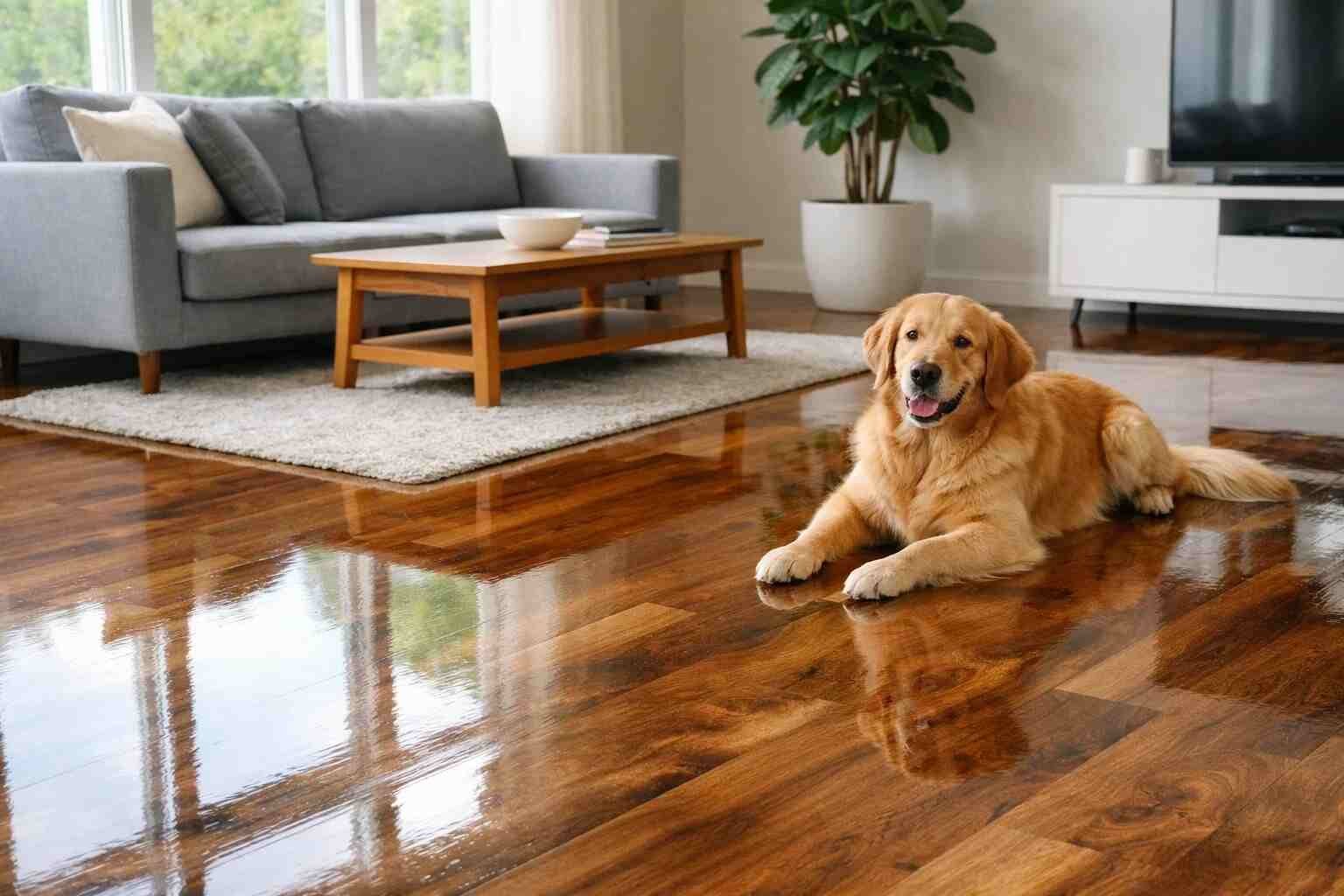
You look at your hardwood floors and see the history of your home etched into the grain—but not in a good way. The deep scratch from moving the sofa last year, the water stain near the dog’s bowl, and the dull, worn path leading to the kitchen. You love the character of wood, but you are tired of the maintenance.
You’ve likely seen those glossy, glass-like floors on social media and wondered if that look is achievable in your own living room. Enter the epoxy resin hardwood floor. It’s often marketed as the ultimate bulletproof shield for wood, promising a showroom shine that lasts for decades.
But before you pour that gallon of resin, you need the full picture. Epoxy isn’t just a “paint-and-forget” solution. It behaves very differently on wood than it does on concrete garage floors.
In this 2025 guide, we are cutting through the hype. We will explore the real pros, the significant risks (that most contractors won’t mention), honest costs, and exactly what to expect when you choose an epoxy finish for your home.
What Is an Epoxy Resin Hardwood Floor?
An epoxy resin hardwood floor isn’t a specific type of wood flooring. Rather, it is a finishing technique where a liquid resin is applied over existing hardwood. Unlike traditional varnishes that soak into the grain, epoxy sits on top, curing into a thick, durable plastic shell.
In 2025, this isn’t just about clear coats. Homeowners are using tinted epoxies, metallic additives, and even “river tables” styles on entire floors to create custom art pieces right under their feet.
How Epoxy Resin Works on Wood Surfaces
Epoxy is a two-part system: a resin and a hardener. When you mix them, a chemical reaction starts. As you pour this mixture onto your floor, it self-levels, filling in deep scratches, gaps between boards, and knot holes.
Once it cures, it forms a seamless, non-porous surface. It bonds mechanically to the wood, essentially encapsulating the top layer in a shield that is much thicker than standard polyurethane.
Why Hardwood Floors Need Special Epoxy Treatment
Here is the technical reality that many DIY blogs skip: Wood moves; standard epoxy does not.
Wood is organic “hygroscopic” material. This means it absorbs and releases moisture from the air, causing it to expand in humid summers and shrink in dry winters. Concrete doesn’t do this, which is why standard epoxy works great in garages.
If you put a rigid, glass-like epoxy resin hardwood floor coating over wood that wants to flex, something has to give. Usually, the epoxy cracks, or the wood tears away from the coating. This is why “flexible epoxy” formulations are critical for wood applications in 2025—they have enough elasticity to move with your floor.
Why Homeowners Are Choosing Epoxy Resin Over Traditional Hardwood Finishes
Despite the technical challenges, the trend is exploding. Why are homeowners ditching traditional wax and poly?
Durability & Scratch Resistance
If you have a busy household, standard wood finishes feel fragile. An epoxy wood floor coating is incredibly tough. It resists abrasion much better than traditional varnishes. While no floor is scratch-proof, epoxy can handle the drag of a toy car or the claws of a medium-sized dog far better than a thin layer of wax.
Moisture, Stain & Chemical Protection
This is the biggest selling point. Once cured, epoxy is waterproof.
- Spilled wine? It wipes right up.
- Pet accidents? No urine burns into the wood.
- Muddy boots? Just mop it away.
For kitchens and entryways, this barrier is a game-changer. It creates a hermetic seal that stops water from ever reaching the wood fibers.
Modern Design & High-Gloss Appeal
There is no denying the “wow” factor. Epoxy provides a depth of shine that polyurethane simply cannot match. It highlights the grain of the wood, making it look 3D.
Real-Life Scenario: We recently saw a rental property owner switch to epoxy in a high-traffic living room. The high-gloss finish not only made the small room look bigger by reflecting light, but it also saved them from refinishing the floors between every tenant.
Hidden Risks of Epoxy Resin on Hardwood Floors (What Most Blogs Ignore)
We believe in honest advice. Here are the “professional secrets” regarding the risks of an epoxy resin hardwood floor.
Expansion, Cracking & Delamination Risks
As mentioned earlier, if you use the wrong resin, your floor will fail. If the wood expands due to high humidity and the epoxy is too rigid, the bond breaks. This is called delamination. It looks like a white, cloudy patch where the finish has lifted off the wood. In severe cases, the epoxy can snap, leaving sharp, glass-like cracks across your floor.
Slippery Surface & Safety Solutions
High gloss often means low friction. An epoxy floor can be dangerously slippery when wet—similar to an ice skating rink.
- The Fix: You must add a “grit” or anti-slip additive into the final topcoat. It reduces the gloss slightly but makes the floor safe for socks and kids.
UV Yellowing & Long-Term Appearance
Standard epoxy is not UV stable. If your living room gets direct sunlight, a standard hardwood epoxy finish will turn an ugly shade of amber or yellow within 6 to 12 months.
- The Fix: You must purchase “UV-stable” or “aliphatic” epoxy. It costs more, but it is non-negotiable for rooms with windows.
Is Your Hardwood Floor Suitable for Epoxy Resin?
Not every floor is a candidate. Before you buy materials, run through this check.
Moisture Content & Subfloor Check
You cannot pour epoxy over damp wood. Period.
- Use a moisture meter. Ideally, wood moisture content should be below 12%.
- If you have a damp crawlspace or basement underneath, the moisture rising through the subfloor will push the epoxy off the wood, causing bubbles.
Old vs New Hardwood Floors
- New Floors: Generally safer as they are stable, but they must be acclimated to the home’s humidity for weeks before coating.
- Old Floors: These often have gaps. Epoxy will flow into these gaps. If there is no subfloor (like in very old homes), the resin will drip right through to the basement! You must seal gaps first.
When Epoxy Should Be Avoided
Do not use epoxy resin flooring for homes if:
- Your floor has significant “bounce” or movement when you walk.
- You have extreme temperature fluctuations (e.g., a cabin without climate control).
- The floor was previously treated with oil or wax (epoxy won’t stick to wax).
Preparing Hardwood Floors for Epoxy Resin (Step-by-Step)
Preparation is 80% of the work. If you rush this, the floor will fail.
Sanding & Surface Leveling
You must sand the wood down to the raw grain. Any trace of old varnish, stain, or wax will prevent bonding.
- Grit sequence: Start with 40 grit to strip, move to 80, and finish with 120. Do not polish it too smooth; epoxy needs a slightly rough surface (“mechanical tooth”) to grab onto.
Primers & Moisture Barriers
Professionals don’t just pour the main coat. They start with a thin primer coat. This seals the wood fibers to prevent air bubbles (outgassing) from rising up and ruining your finish. It also acts as a moisture barrier.
Common Prep Mistakes to Avoid
- Not vacuuming enough: Dust is your enemy. One hair or dust bunny will ruin the mirror finish.
- Ignoring temperature: If the room is too cold, the epoxy won’t cure. If it’s too hot, it cures too fast. Ideally, aim for 70°F-75°F.
Pro Tool List:
- Industrial drum sander
- Shop vac with HEPA filter
- Spiked shoes (for walking on wet epoxy)
- Notched squeegee
- Propane torch or heat gun (to pop bubbles)
Choosing the Best Epoxy Resin for Hardwood Floors in 2025
Technology has improved. Don’t grab generic garage epoxy.
Flexible vs Rigid Epoxy
For wood floor epoxy application, always look for “flexible epoxy” or “soft-touch” resins. These have higher elongation properties, allowing them to stretch slightly as your wood floor moves.
Low-VOC & Indoor-Safe Options
Indoor air quality is a major focus in 2025. Old-school epoxies smell terrible and release harmful Volatile Organic Compounds (VOCs).
- Look for: “100% Solids” epoxy or “Zero VOC” labels. These are safer for your family and pets during the curing process.
Clear, Tinted & Decorative Finishes
- Clear: Best for preserving the natural look of oak, maple, or walnut.
- Tinted: Great if the wood is stained or damaged and you want a solid color.
- Metallic: Uses mica powders to create swirling, marble-like effects (very popular in modern homes).
Epoxy Resin Application Process on Hardwood Floors
Mixing, Pouring & Leveling
Mixing must be exact. If the ratio is off by even 5%, the floor will stay sticky forever.
- Mix Part A and Part B for the exact time stated (usually 3 mins).
- Pour in ribbons across the floor.
- Use a notched squeegee to spread it evenly.
- The liquid will naturally level itself out.
Curing Time & Temperature Control
The Timeline Table:
Phase | Time Required | Activity |
|---|---|---|
Day 1 | Prep & Prime | Sanding, cleaning, applying primer coat. |
Day 2 | Base Coat | Pouring the main epoxy layer. |
Day 3 | Top Coat | Applying final UV-resistant urethane topcoat. |
Day 4-5 | Light Foot Traffic | Safe to walk on with socks. |
Day 7 | Full Cure | Furniture can be moved back in. |
When to Call a Professional
If your room is larger than 400 sq. ft., or if you have complex layouts with islands and nooks, call a pro. Epoxy has a short “working time” (pot life). If you don’t spread it fast enough, it hardens in the bucket.
Cost of Epoxy Resin Hardwood Floors (DIY vs Professional)
Is an epoxy resin hardwood floor cheaper than refinishing? Not always.
Material Cost Breakdown
High-quality, UV-stable, flexible floor epoxy is expensive.
- Cost: Expect to pay $100 – $150 per gallon.
- Coverage: One gallon usually covers only 100-150 sq. ft. depending on thickness.
Labor & Hidden Costs
- DIY: $3 – $5 per sq. ft. (Materials + Tool Rental)
- Professional: $8 – $15 per sq. ft.
Hidden costs include sanding belts, primer, topcoats, and renting a hotel room for a few nights to avoid the fumes (even with low VOCs, the smell can be strong).
Long-Term Value vs Refinishing
While the upfront cost is higher than a simple polyurethane coat ($3-$5 per sq. ft. pro), epoxy lasts longer without needing a recoat. However, if it cracks, repairs are expensive.
Epoxy Resin vs Other Hardwood Floor Finishes (Comparison)
How does epoxy vs polyurethane floors stack up?
Epoxy vs Polyurethane
Polyurethane is the industry standard. It’s flexible, cheap, and easy to apply. But it’s thin. Epoxy is thick, armor-like, and harder to apply. Polyurethane eventually wears through in high-traffic paths; epoxy generally does not.
Epoxy vs Oil & Wax Finishes
Oil/Wax offers a natural, matte look and is easy to patch-repair. Epoxy looks plastic/glassy and is very hard to patch-repair invisibly.
Which Is Best for Your Home?
Feature | Epoxy Resin | Polyurethane | Oil / Wax |
|---|---|---|---|
Durability | High (Armor-like) | Medium | Low (Needs re-oiling) |
Flexibility | Low (Risk of cracks) | High | Very High |
Waterproof | 100% | Water Resistant | Water Resistant |
Look | High Gloss / Glassy | Satin / Semi-Gloss | Matte / Natural |
DIY Friendly | Low | High | Medium |
Cost | $$$ | $ | $$ |
Maintenance, Cleaning & Longevity of Epoxy Resin Hardwood Floors
Daily Cleaning Routine
The best tool is a microfiber dust mop. Dirt and sand act like sandpaper, dulling the gloss over time.
- Cleaner: Use a pH-neutral cleaner. Avoid vinegar or citrus-based cleaners, as the acid can dull the epoxy over time.
Scratch Repair & Recoating
If you get a deep scratch, you can’t just “buff it out” easily. You may need to sand the area and re-apply a topcoat. This is why a sacrificial topcoat (like a wax or specific urethane finish) over the epoxy is often recommended.
Expected Lifespan
With proper care, an epoxy resin hardwood floor can last 10–20 years in a residential setting before needing a significant overhaul.
FAQs – Epoxy Resin Hardwood Floor
Can epoxy resin crack on hardwood floors?
Yes. If the wood underneath expands significantly due to humidity changes and the epoxy is rigid, it will crack. Using flexible epoxy and maintaining consistent indoor humidity helps prevent this.
How long does epoxy last on wood?
In a typical home, expect 10 to 20 years of life. However, the high-gloss finish may show micro-scratches (“patina”) after 3-5 years in high-traffic areas.
Is epoxy safe for indoor use?
Yes, provided you use 100% solids, Zero-VOC epoxy. Once fully cured (hardened), it is chemically inert and safe for pets and children.
Can epoxy be removed from hardwood?
It is extremely difficult. You cannot chemically strip it easily. It usually requires aggressive sanding that removes a significant layer of the wood itself. It is a permanent decision.
Does epoxy damage wood underneath?
No, the epoxy itself seals and protects the wood. However, if moisture gets trapped under the epoxy (from the subfloor), the wood can rot because it cannot breathe.
Conclusion
Deciding to install an epoxy resin hardwood floor is a bold choice for 2025. It offers unmatched protection against water and wear, and the aesthetic is undeniably modern and high-end.
However, it is not for purists who love the natural feel of timber, nor is it for homes with unstable subfloors or wild humidity swings.
Our Expert Recommendation:
- Choose Epoxy if: You want a modern, glass-like look, have high traffic (kids/pets), and are willing to invest in high-quality, flexible materials.
- Stick to Polyurethane if: You live in a historic home with old, shifting floors, or if you prefer a traditional satin wood finish.
If you decide to go the epoxy route, ensure you buy UV-stable, flexible resin, and seriously consider hiring a pro for the install. The results can be breathtaking, but the margin for error is slim.
Epoxy Resin Concrete Floor: Benefits, Types, and Installation Tips